
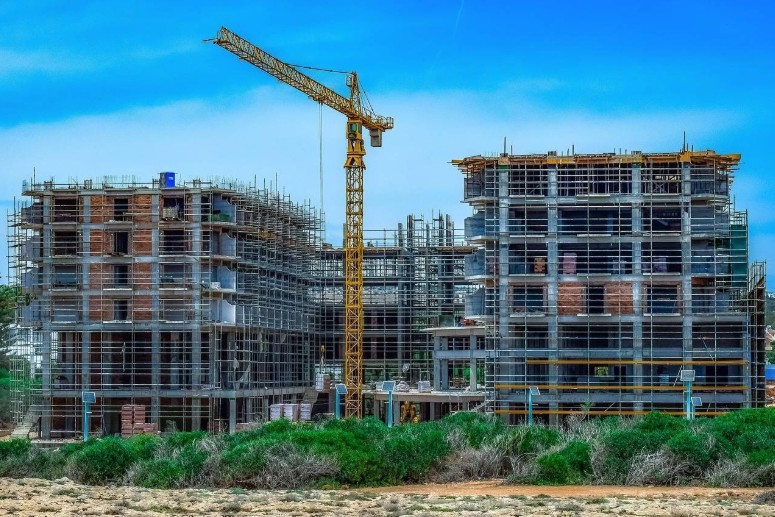
When 29 homebuyers in a Thane housing project approached MahaRERA in 2022, their complaints were straightforward: the developer, Vihang Infrastructure Pvt. Ltd., had failed to deliver promised amenities as mentioned in their agreements for sale, while also delaying possession of their flats. MahaRERA heard all 29 cases together and adjudicated on both counts—delayed possession interest and undelivered facilities—in a single combined order.
It was not an isolated incident.
Across Maharashtra, Uttar Pradesh, Karnataka, and Haryana, RERA authorities have been steadily accumulating a body of case law around one clear principle: promised amenities, including sports and recreational facilities, are legally binding commitments.
For developers who still treat sports infrastructure as an afterthought, that principle carries serious consequences.
Sports Amenities Aren't Optional Anymore
A decade ago, developers could promise a cricket pitch or a swimming pool in glossy brochures and worry about actually building them later—if the budget allowed.
Those days are gone.
RERA has fundamentally altered the equation by making promised amenities legally binding commitments. Sports facilities—from tennis courts to jogging tracks—now fall under the same rigorous scrutiny as structural plans and title deeds. The Real Estate (Regulation and Development) Act, 2016, demands compliance along with penalties that can include project deregistration and personal liability for promoters.
The shift in buyer expectations reinforces this.
According to Knight Frank India’s Beyond Bricks: The Pulse of Home Buying survey—conducted across 1,629 respondents in eight major cities—access to amenities plays a critical role in home selection. Notably, features like fitness centres and community clubs are now so expected that most buyers treat them as standard rather than exceptional, a finding that underscores just how non-negotiable these facilities have become in the market.
What Exactly Counts as Sports Infrastructure?
This is where things get technical, and where many developers stumble.
RERA doesn’t provide a one-size-fits-all definition of sports infrastructure. Instead, it operates on a simple principle: whatever you promise, you must deliver. If you have promised a badminton court, you need detailed architectural drawings, safety compliance certificates, and maintenance plans. Want to advertise a swimming pool? Better have water treatment specifications, lifeguard provisions, and building code approvals ready.
The scope typically includes outdoor facilities like cricket nets, basketball courts, tennis courts, and jogging tracks. It covers indoor amenities such as squash courts, table tennis rooms, and fitness centres. And increasingly, it encompasses specialised spaces like yoga decks, cycling tracks, and even rock-climbing walls.
But here’s the catch: each facility type carries its own regulatory requirements.
Take swimming pools, for example. Beyond standard construction permits, you’re looking at water quality certifications, depth compliance with national safety standards, chemical storage regulations, and in some states, mandatory lifeguard licensing requirements. Karnataka’s RERA authority, in particular, has emphasised environmental compliance for water-intensive facilities—a consideration that can hold up approvals if not addressed from the outset.
A tennis court, similarly, isn’t just a flat surface with a net. It requires specific surfacing materials, lighting compliance for night play, fencing standards, and accessibility features under the Rights of Persons with Disabilities Act, 2016. Miss any one element, and your approval can face delays or rejection.
RERA benches in Telangana, Karnataka, Haryana, and Uttar Pradesh have all passed similarly buyer-friendly orders in recent years. These orders, once published on state portals, become part of the permanent public record against a developer’s name with consequences that extend well beyond the immediate case.
The Documentation Minefield
If you’re a developer approaching RERA approval, here’s what your sports infrastructure documentation package needs to include:
- Architectural and engineering plans that show precise locations, dimensions, and specifications for each facility. Not conceptual sketches. Actual, engineer-stamped drawings.
- Structural safety certificates from licensed engineers confirming that facilities meet load-bearing requirements, especially for rooftop installations or structures with overhead elements.
- Environmental clearances where applicable. A swimming pool is a significant water consumption point, and several states now require environmental impact assessments for water-intensive amenities.
- Land use compliance documentation proving that the designated land parcel permits recreational construction. This trips up developers more often than you’d think, especially in states with strict zoning laws.
- Phasing and timeline commitments that clearly outline when each facility will be completed relative to the overall project schedule. RERA takes these timelines seriously—miss them, and you’re looking at penalty interest on delayed delivery.
- Maintenance and operational plans detailing how these facilities will be managed post-handover, including cost provisions and homeowner association structures.
- Quarterly progress updates must also be uploaded.
According to a 2023 RERA assessment report, 75–80% of ongoing registered real estate projects were not uploading these status reports—a compliance gap that authorities have since moved to address more aggressively.
The Financial Implications Nobody Talks About
Let’s talk money, because that’s ultimately what keeps developers up at night.
Sports infrastructure represents a significant capital investment, typically constituting a meaningful share of total project costs—and the proportion rises sharply for luxury developments. But the real financial exposure comes from non-compliance.
RERA’s penalty provisions are no joke. Under Section 61 of the Act, promoters who violate any provision can face penalties of up to 5% of the estimated project cost. Under Section 59, failure to register a project can attract penalties of up to 10% of the project cost. Non-compliance with RERA or Appellate Tribunal orders can result in imprisonment of up to three years or additional fines.
Reputational damage compounds the financial risk. Complaints filed with RERA are publicly accessible on state portals. In an era where online reviews and buyer forums wield enormous influence, a single RERA complaint about undelivered sports facilities can affect future sales in ways that are difficult to quantify and harder to recover from.
RERA benches in Telangana, Karnataka, and Haryana have all passed strong, buyer-friendly orders in recent years and those orders, once published, become part of the public record against a developer’s name.
Smart developers are now building sports infrastructure costs—and timelines—into their project financing from day one, rather than treating them as afterthoughts.
State-by-State Variations: The Compliance Patchwork
Here’s a curveball: RERA implementation isn’t uniform across India.
While the central Act provides the framework, state-level RERA authorities have considerable autonomy in interpretation and enforcement. Karnataka’s authority emphasises environmental compliance, especially for water-intensive facilities. UP RERA has focused heavily on timeline adherence and quarterly reporting; the authority has imposed late fees of ₹10,000 per quarter for delays in filing quarterly project details, as documented in its 2022 guidance. MP RERA has issued similar orders.
You cannot copy-paste a compliance strategy from one state to another. What satisfies Maharashtra’s disclosure requirements may be insufficient in Tamil Nadu, and vice versa. Developers operating across multiple states need state-specific expertise, and ideally legal and technical advisors who are familiar with the local RERA authority’s actual enforcement patterns, not just the text of the central Act.
Technology as a Compliance Enabler
Interestingly, technology is emerging as developers’ best friend in navigating sports infrastructure compliance.
Progressive developers are now using Building Information Modelling (BIM) to create detailed 3D models of sports facilities, allowing for more precise documentation and reducing the risk of specification gaps that could delay approvals. According to Bain & Company’s analysis of India’s residential real estate sector, BIM adoption has a positive effect across the complete construction value chain, leading to time and cost savings, reduced complexity, and more sustainable development processes—though it requires a collaborative team culture and clear responsibilities across contractors and architects.
Digital documentation platforms are streamlining RERA submission processes by enabling more accurate, structured uploads of required project data. Some developers are deploying IoT sensors in sports facilities to generate real-time compliance data—water quality monitoring in pools, air quality tracking in indoor gyms, usage analytics for courts—creating an audit trail that satisfies both RERA reporting requirements and buyer expectations.
Technology in this context is about creating verifiable, transparent compliance that protects both developers and buyers, and that can withstand scrutiny if a dispute is ever filed.
Making Compliance Your Competitive Advantage
Here’s the counterintuitive truth: RERA’s sports infrastructure requirements, while demanding, actually present an opportunity.
Developers who embrace rigorous compliance are differentiating themselves in an increasingly competitive market. Buyers are more educated, more demanding, and more willing to pay premiums for projects with verified, well-planned amenities—a trend well documented in market research and underscored by the volume of amenity-related
RERA complaints that are now being resolved in buyers’ favour.
The developers winning in this environment are those who’ve stopped viewing RERA compliance as a regulatory burden and started seeing it as a quality benchmark. They’re bringing sports facility consultants into project planning from day one. They’re budgeting realistically for amenities and building delivery timelines that they can actually meet. They’re creating transparent buyer communication channels that build trust rather than invite litigation.
The era of procrastination and perceived eventuality is past us.
For builders navigating this new landscape, the message is clear: treat sports infrastructure with the same seriousness you’d treat structural engineering or title clearances. Get expert advice early, document everything meticulously, and build realistic timelines with buffer. In the post-RERA era, that promised badminton court in your brochure is a legal commitment and it might just be the difference between a successful project and a regulatory nightmare.
Frequently Asked Questions
What is sports infrastructure compliance in real estate projects?
Sports infrastructure compliance refers to planning and developing sports amenities in accordance with the applicable project approvals, sanctioned plans, local development regulations, and other relevant requirements. For builders, this includes ensuring that proposed sports facilities are properly planned, documented, designed, and executed as part of the overall real estate development.
Why is sports infrastructure planning important for builders?
Early sports infrastructure planning helps builders allocate appropriate space, understand technical requirements, coordinate civil and MEP works, plan budgets, and avoid conflicts with other project components. Early planning can also help ensure that the proposed amenities are aligned with approved project documentation and can be delivered within the overall construction schedule.
What should builders consider when planning sports infrastructure?
Builders should consider available space, site conditions, user requirements, applicable regulations, drainage, lighting, safety, surface specifications, accessibility, equipment, maintenance requirements, and long-term operating costs. The design should also account for the intended sport, expected usage levels, climate, and integration with the surrounding development.
Are sports amenities legally binding under RERA?
Yes. Under RERA, whatever amenities a developer promises in the sale agreement — including sports courts, swimming pools, or fitness facilities — must be delivered as committed, with penalties for non-compliance including project deregistration and personal liability for promoters.
What happens if a builder doesn't deliver promised sports facilities?
MahaRERA has ruled on multiple cases where developers failed to deliver promised amenities, adjudicating on both delayed possession and undelivered facilities in combined orders — meaning buyers can seek compensation and authorities can penalize builders for both issues simultaneously.
What documentation is required for sports infrastructure RERA approval?
Builders need engineer-stamped architectural plans, structural safety certificates, environmental clearances where applicable, land use compliance documentation, phasing and timeline commitments, and post-handover maintenance plans — not conceptual sketches or verbal commitments.
When should developers involve a sports facility consultant in RERA-registered projects?
Developers should bring in technical expertise during initial project planning, before specifications are finalized — since documentation requirements (safety certificates, surfacing specifications, lighting compliance) need to be built into design from the outset, not retrofitted after RERA submission.
Can homebuyers file a RERA complaint if promised sports facilities aren't delivered?
Yes — homebuyers can approach their state RERA authority directly, and complaints become part of the public record against the developer once published on state portals, which can affect future sales beyond the immediate financial penalty.
Why should builders work with a professional sports infrastructure company?
A professional sports infrastructure company can help builders address the technical requirements of different sports facilities, select appropriate surfaces and systems, coordinate installation, and plan for long-term maintenance. Professional involvement from the planning stage can also help integrate sports facilities more effectively with the wider development project.
Looking for expert sports infrastructure solutions for your residential or commercial project?
Get in touch with our team for sports infrastructure planning, design, construction, and maintenance. Talk to The Sports Habitat Today